Solar Panels on an East-West Roof: Is It Worth It in Ireland?
Don't have a south-facing roof? East-west solar panels still produce 80-85% of optimal output. Here's how to get the best results from an east or west-facing roof in Ireland.
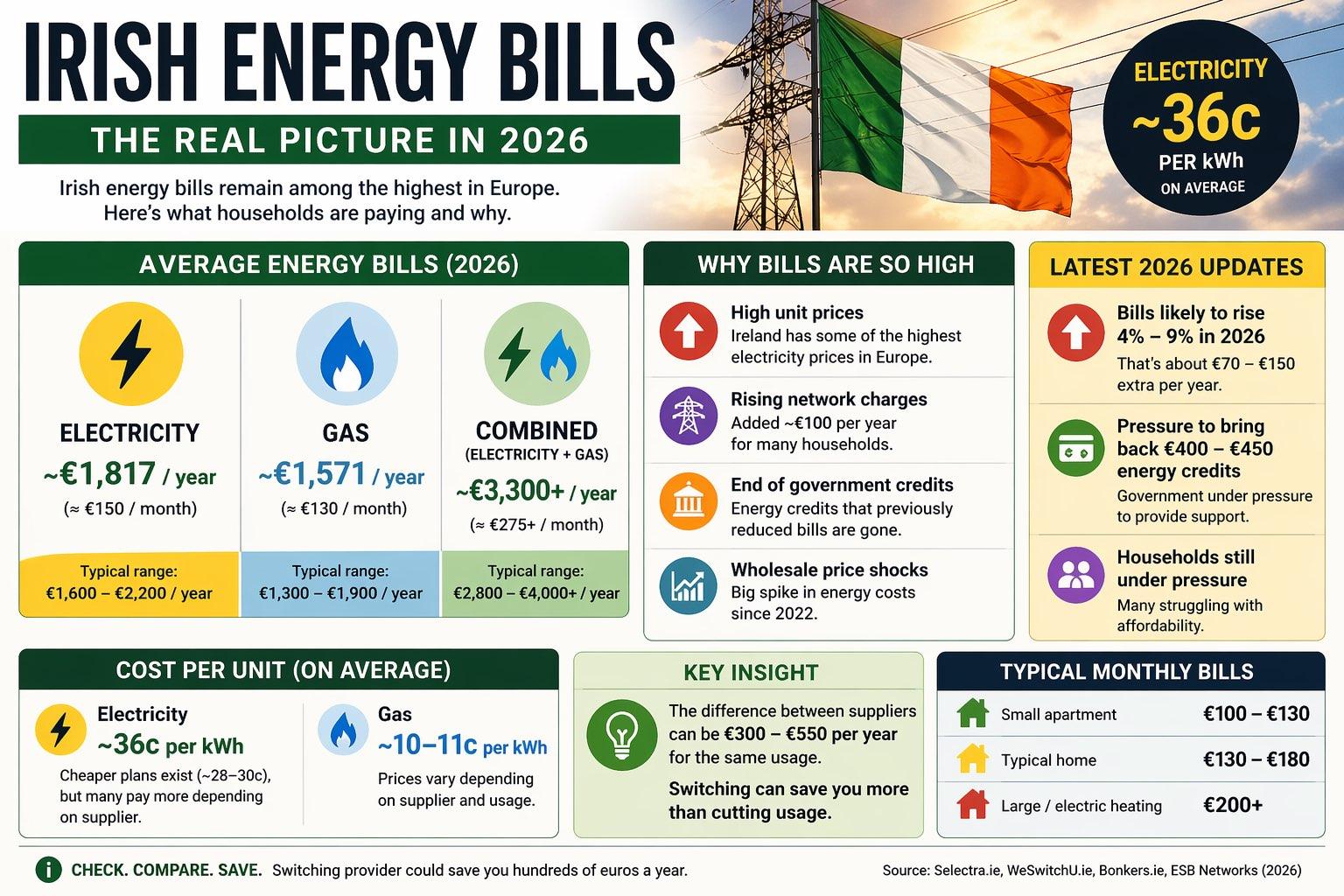
One of the most common questions we hear from Irish homeowners is: "My roof doesn't face south — is there any point in getting solar panels?" It's a fair question. Most solar guides lead with "south-facing is best," which leaves anyone with an east-west roof wondering if they're out of luck.
The short answer: solar panels on an east or west-facing roof are absolutely worth it in Ireland. You'll generate slightly less than a perfect south-facing setup, but the difference is smaller than most people think — and in some cases, an east-west split actually works better for your electricity bill.
How Much Less Do East-West Panels Produce?
Let's get the numbers out of the way. Based on PVGIS solar irradiance data for Irish latitudes, here's what you can expect from different roof orientations compared to an ideal south-facing roof at a 30–35° pitch:
- South-facing: 100% of potential yield (the benchmark)
- South-east or south-west: ~90–95% of south-facing yield
- East or west-facing: ~80–85% of south-facing yield
- North-east or north-west: ~55–65% — not ideal, but can still work on low-pitch roofs
- North-facing: ~40–60% — lower output, though Ireland's high proportion of diffuse light means north-facing panels perform better here than in sunnier countries. Not usually recommended, but not ruled out on shallow-pitch roofs where no other option exists. See our north-facing roof guide for the figures by pitch
So an east or west-facing roof loses roughly 15–20% compared to south. That's not nothing, but it's far from a dealbreaker. A well-sized system on an east-west roof will still generate 2,400–2,800 kWh per year — enough to make a real dent in your electricity bills.
East-West Split vs All Panels on One Side
If you have an east-west roof (like most semi-detached and detached houses in Ireland), you have two main options:
Option 1: Split panels across both sides (e.g. 4 east + 4 west)
This is often the smarter choice for most households. Here's why:
- Longer generation window. East-facing panels catch the morning sun, west-facing panels catch the afternoon and evening sun. You're generating power across a broader part of the day.
- Higher self-consumption. Because generation is spread throughout the day, you use more of what you produce directly — running appliances, heating water, charging an EV. This is where the real savings are, since you avoid buying electricity at 35–42c/kWh.
- Less wasted export. A south-facing system produces a big midday spike, much of which gets exported at lower rates (typically 18–24c/kWh). An east-west split flattens this curve, keeping more money in your pocket.
Option 2: All panels on one side (e.g. 8 east or 8 west)
This can make sense in specific situations:
- 8 west-facing works well if your household uses most electricity in the evenings — cooking dinner, running the dishwasher, charging an EV overnight with a pre-boost in the afternoon.
- 8 east-facing suits homes where most usage happens in the morning — working from home, running the washing machine early, heating water for the day.
- One side may have less shading from trees, chimneys, or neighbouring buildings, making it the obvious choice.
Which option produces more total energy?
In terms of raw kWh, all panels on the better-facing side will produce slightly more total energy. But total production isn't the whole picture — self-consumption is what drives your savings. Most Irish homeowners with an east-west split find they self-consume 10–15% more of their generation compared to a single-side setup, which often more than compensates for the slightly lower total yield.
What Matters More Than Roof Direction for Solar Panels
When deciding on the best roof direction for solar panels in Ireland, orientation gets a lot of attention — but several other factors actually have a bigger impact on your solar performance:
1. Shading
Even partial shading from a tree, chimney, or neighbouring building can reduce a panel's output by 20–50%. A west-facing roof with no shading will outperform a south-facing roof with a large tree blocking the afternoon sun. Any reputable installer will assess shading as part of their site survey.
2. Roof pitch
The ideal angle for solar panels in Ireland is 30–35° from horizontal. Most Irish roofs sit between 25° and 45°, which is fine. Very steep or very flat roofs lose a few percent, but it's rarely significant. Flat roofs can use angled mounting frames to optimise the tilt.
3. Self-consumption rate
This is the single biggest driver of your financial return. Electricity you use directly from your panels saves you the full retail rate (35–42c/kWh). Electricity you export earns much less (18–24c/kWh). Households with higher daytime usage — especially those with a home EV charger, heat pump, or someone working from home — get significantly better returns.
4. System size
A correctly sized system matters more than chasing the perfect orientation. Our solar calculator can help you work out the right size for your usage. For a full overview of how panels work in different conditions, see our complete solar panels guide.
Real-World Payback: East-West vs South
Here's a realistic comparison for a typical 10-panel system in Ireland:
| South-facing | East-west split | |
|---|---|---|
| Annual generation | ~3,200 kWh | ~2,700 kWh |
| Self-consumption rate | ~35–45% | ~45–55% |
| Annual savings | ~€700–€900 | ~€650–€850 |
| System cost (after SEAI grant) | €6,500–€7,200 | €6,500–€7,200 |
| Payback period | 5–7 years | 6–8 years |
| 25-year savings | ~€20,000–€25,000 | ~€18,000–€23,000 |
The payback difference is typically only 1–2 years. After that, both setups generate effectively free electricity for 20+ years. With electricity prices likely to keep rising, the long-term case is strong regardless of orientation.
SEAI Grants: Orientation Doesn't Matter
The SEAI solar PV grant of up to €1,800 is available regardless of your roof orientation. There's no requirement for south-facing panels. As long as your home was built and occupied before 2021, you use an SEAI-registered installer, and the system meets the technical requirements, you qualify. The grant covers:
- €700 per kWp for the first 2 kWp
- €200 per kWp for the next 2 kWp
- Up to €1,800 maximum
Your installer will handle the grant application as part of the process. You also benefit from 0% VAT on residential solar installations.
East-West Solar in Summer vs Winter
East-west systems actually have a seasonal advantage. In summer, when Ireland gets 16–17 hours of daylight, east-west panels capture useful energy from early morning through late evening — a wider window than south-facing panels, which peak around midday. In winter, the low sun angle means all orientations produce less, and the gap between south and east-west narrows. If you're curious about cold-weather performance, see our guide on solar panels in winter.
Adding a Battery to an East-West System
A battery storage system can boost your self-consumption rate from ~50% to 70–80%, regardless of roof orientation. However, the economics of batteries depend on the price gap between what you pay for electricity and what you earn from exports. For east-west systems, batteries are slightly less impactful since you already have better natural self-consumption — but they're still worth considering if you want to maximise independence from the grid.
Tips for Getting the Most from an East-West Setup
- Use a smart immersion controller (like an Eddi or iBoost) to divert surplus solar to your hot water tank instead of exporting it.
- Run heavy appliances during daylight hours — washing machine, dryer, dishwasher. With east-west panels, you have a wider window to do this.
- Consider microinverters or optimisers rather than a single string inverter. These handle mixed orientations better and ensure one side doesn't drag down the other. Our inverter comparison guide explains the differences.
- Get at least 3 quotes from SEAI-registered installers and ask specifically about their experience with east-west installations.
Frequently Asked Questions
Do solar panels have to face south in Ireland?
No. South-facing is optimal, but east and west-facing panels still produce 80–85% of the output. This is more than enough for a strong financial return. Many Irish homes successfully run solar on east-west roofs.
Is it better to put all solar panels on one side of the roof?
Not necessarily. Splitting panels across east and west sides gives you a longer generation window and higher self-consumption, which often makes up for slightly lower total output. The best option depends on your household's electricity usage patterns and any shading issues.
How much do solar panels produce on an east-facing roof in Ireland?
East-facing panels in Ireland typically produce around 80–85% of what south-facing panels would generate — roughly 2,400–2,800 kWh per year for a standard 10-panel system. Morning generation is strong, tapering off in the afternoon.
Can I get the SEAI grant with an east-west roof?
Yes. The SEAI grant has no orientation requirement. You can claim up to €1,800 regardless of whether your panels face south, east, west, or a combination.
Do I need a special inverter for an east-west setup?
A standard string inverter with dual MPPT inputs can handle east-west configurations — one string for each orientation. Alternatively, microinverters or power optimisers work well as they optimise each panel independently. Your installer will recommend the best option for your specific setup.
The Bottom Line
If you have an east-west roof and you've been holding off on solar because it's "not ideal," you're leaving money on the table. The 15–20% reduction in output compared to south-facing is easily offset by strong self-consumption, SEAI grants, and 25+ years of electricity savings. For most Irish homes with east-west roofs, the payback period is 6–8 years — after which your panels generate effectively free electricity.
Use our solar savings calculator to estimate your returns, or browse SEAI-registered installers in your area to get quotes.
John Rooney is the editor of Solar Info and has been covering the Irish solar energy market since 2023. He fact-checks all content against official SEAI data and maintains relationships with SEAI-registered installers across Ireland.